
Knowledge
Hybrid vs grid-tied: What is the difference
How grid-tied and hybrid battery systems differ, and which businesses should choose which.
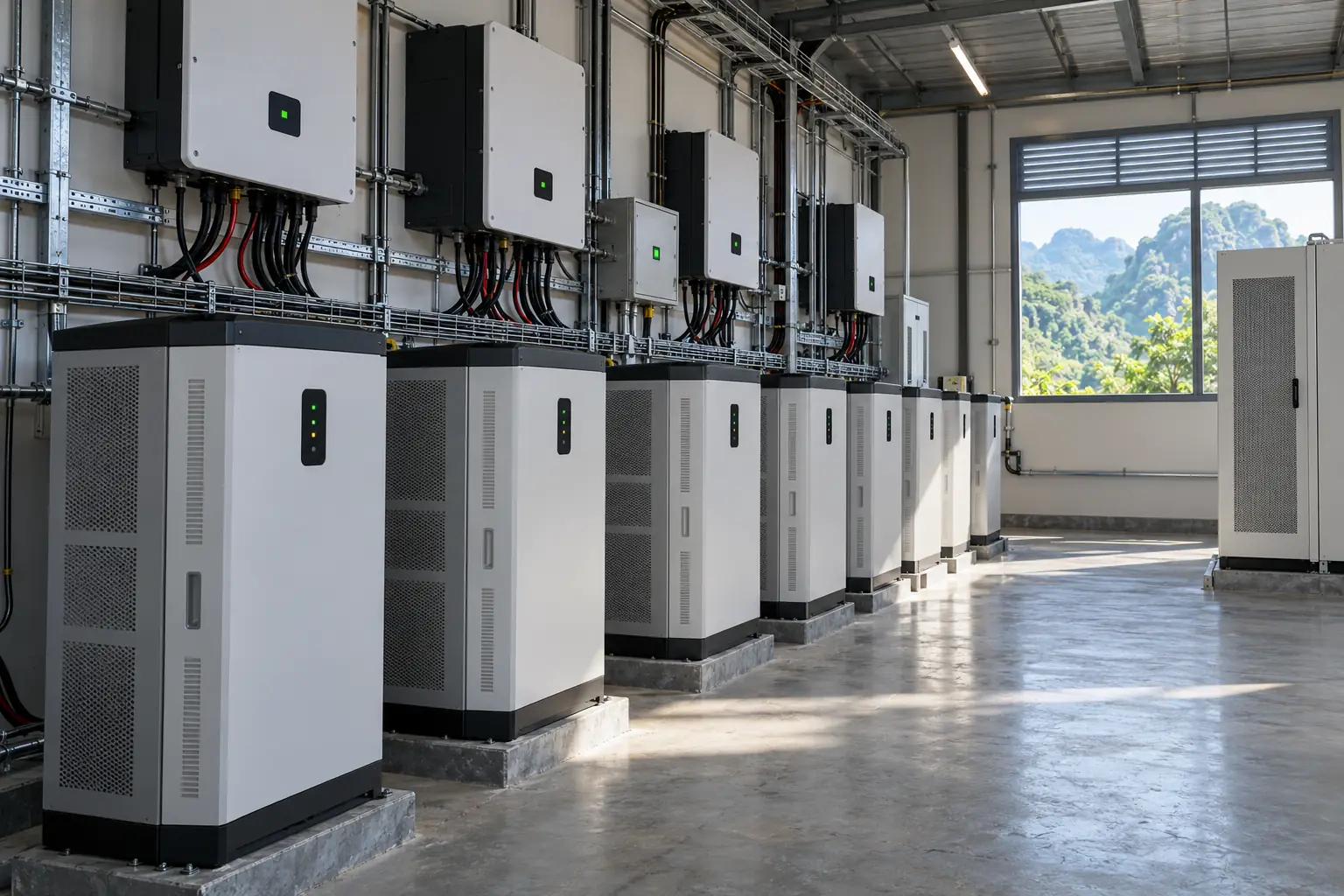
Both put panels on the roof and connect to the grid. The difference lies in the battery and the inverter.
Grid-tied
A grid-tied inverter converts panel power to AC and feeds it straight into your switchboard. Solar is only usable while the sun shines. In a grid outage the inverter disconnects for safety, so the system stops too.
Suits: Daytime factories whose daytime load exceeds panel output.
Hybrid
A hybrid inverter splits power between load, battery and grid. Daytime surplus charges the battery for the evening or for load peaks. In an outage, priority loads keep running from the battery.
Suits: Hotels and homestays with heavy evening use; workshops with short peaks; sites with unstable grid supply.
How to choose
Look at the hourly load profile. If daytime use already absorbs all panel output, a battery adds little. If there is daytime surplus and a large evening load, a battery is worth considering. That is why TTK meters the load for a few weeks before deciding.
Updated 2026-10-28