

Energy for businesses in Ninh Binh
Solar by day, battery for the evening peak, and every kWh visible through EMS.
TTK surveys, meters, designs and installs hybrid solar on factory, hotel and workshop roofs. Enter your electricity bill and the calculator returns a system size and a savings range.
1,166 kWh
per kWp per year in Ninh Binh (PVGIS, 10° roof)
0.248 kWp/m²
power density of the Hi-MO X10 670 W panel
5 steps
from survey to operation
What kind of business are you?

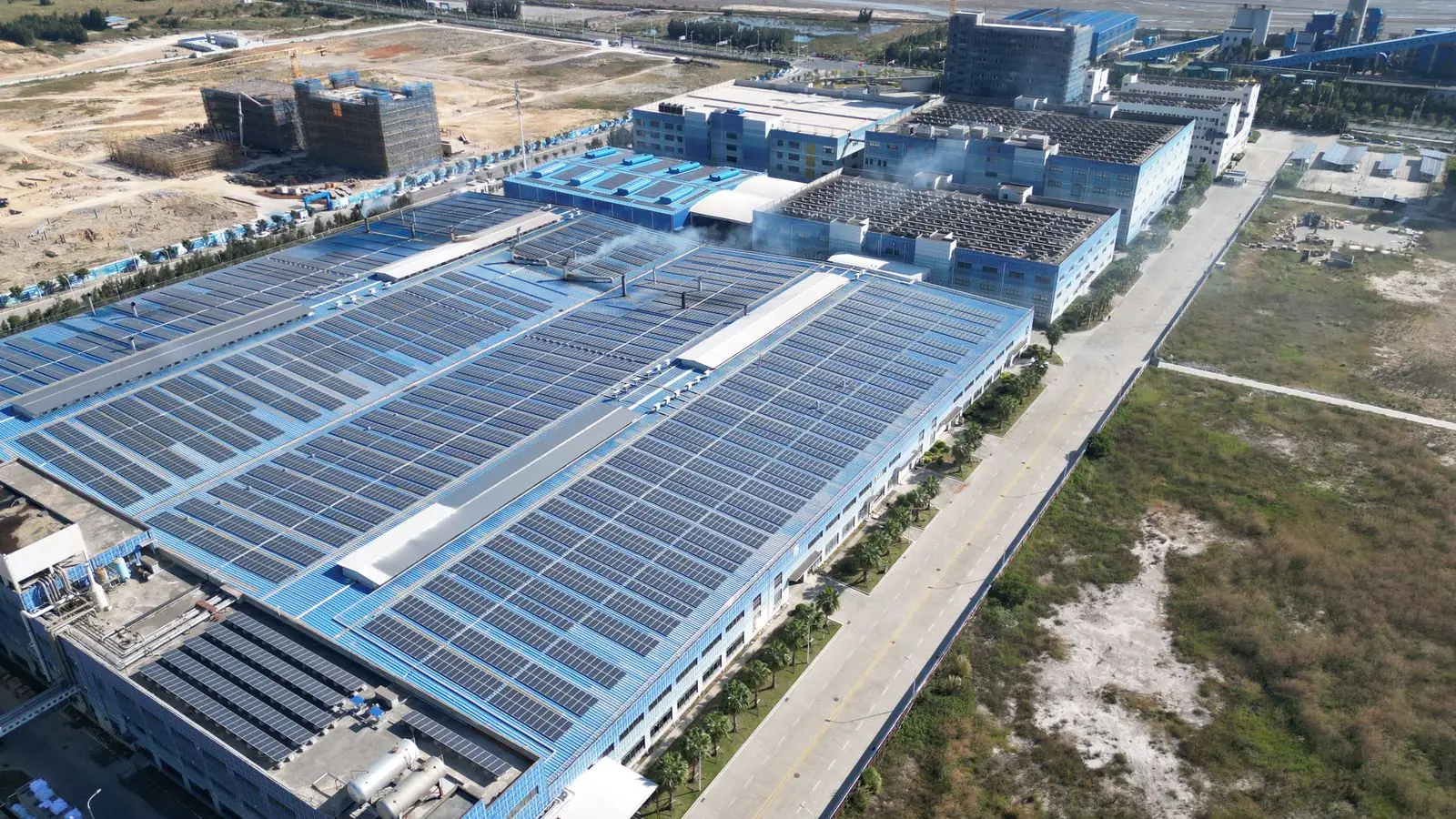
Factories
Cut daytime electricity costs, with metered data for customer reporting.
View details
Hotels and homestays
Use daytime solar in the evening, with backup power.
View details
Machining and shipyards
Shave the peaks of cutting and welding machines, with before-and-after data.
View details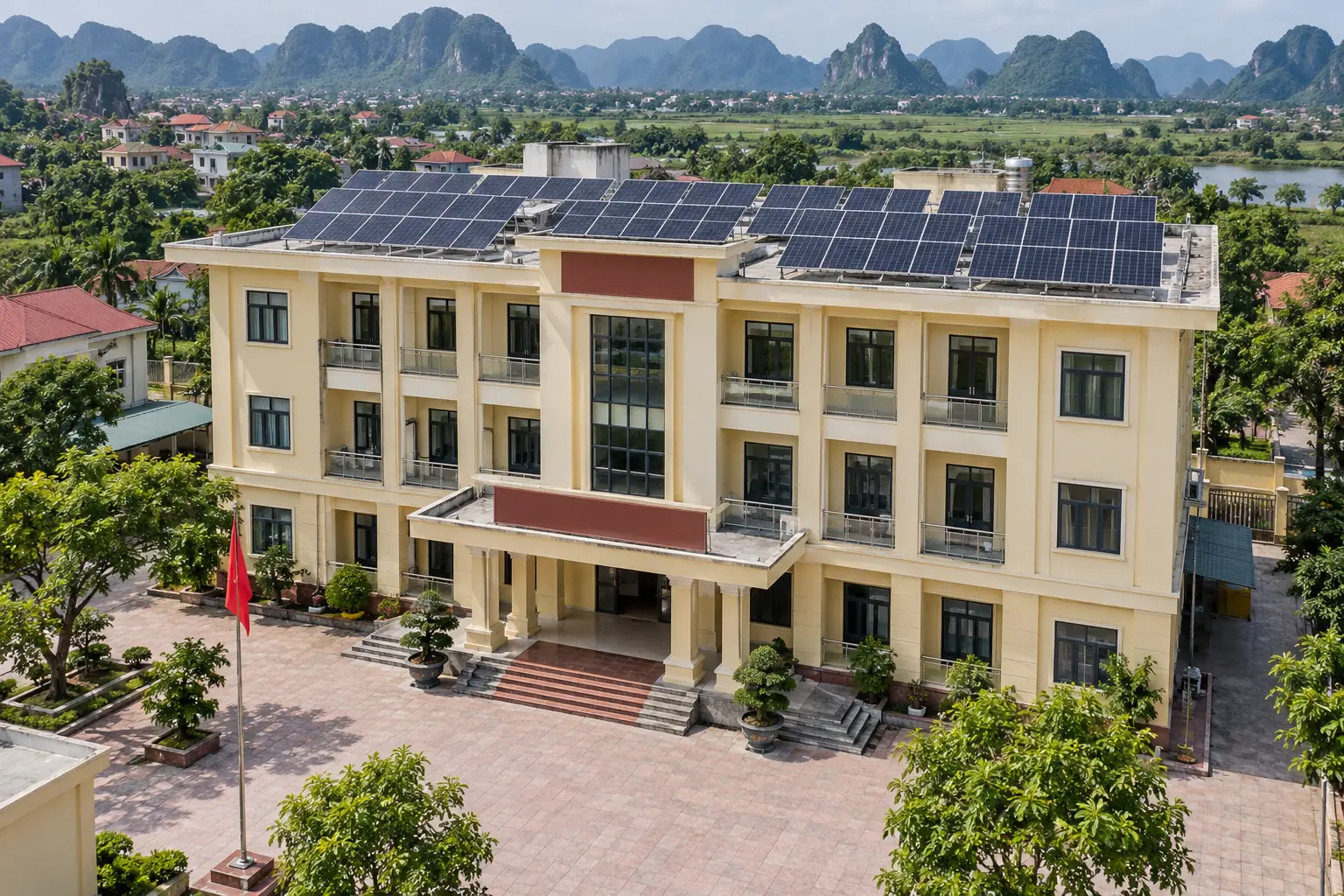
Government offices and public units
Use solar during office hours, with EMS data for energy-efficiency reporting.
View detailsHow a hybrid system works
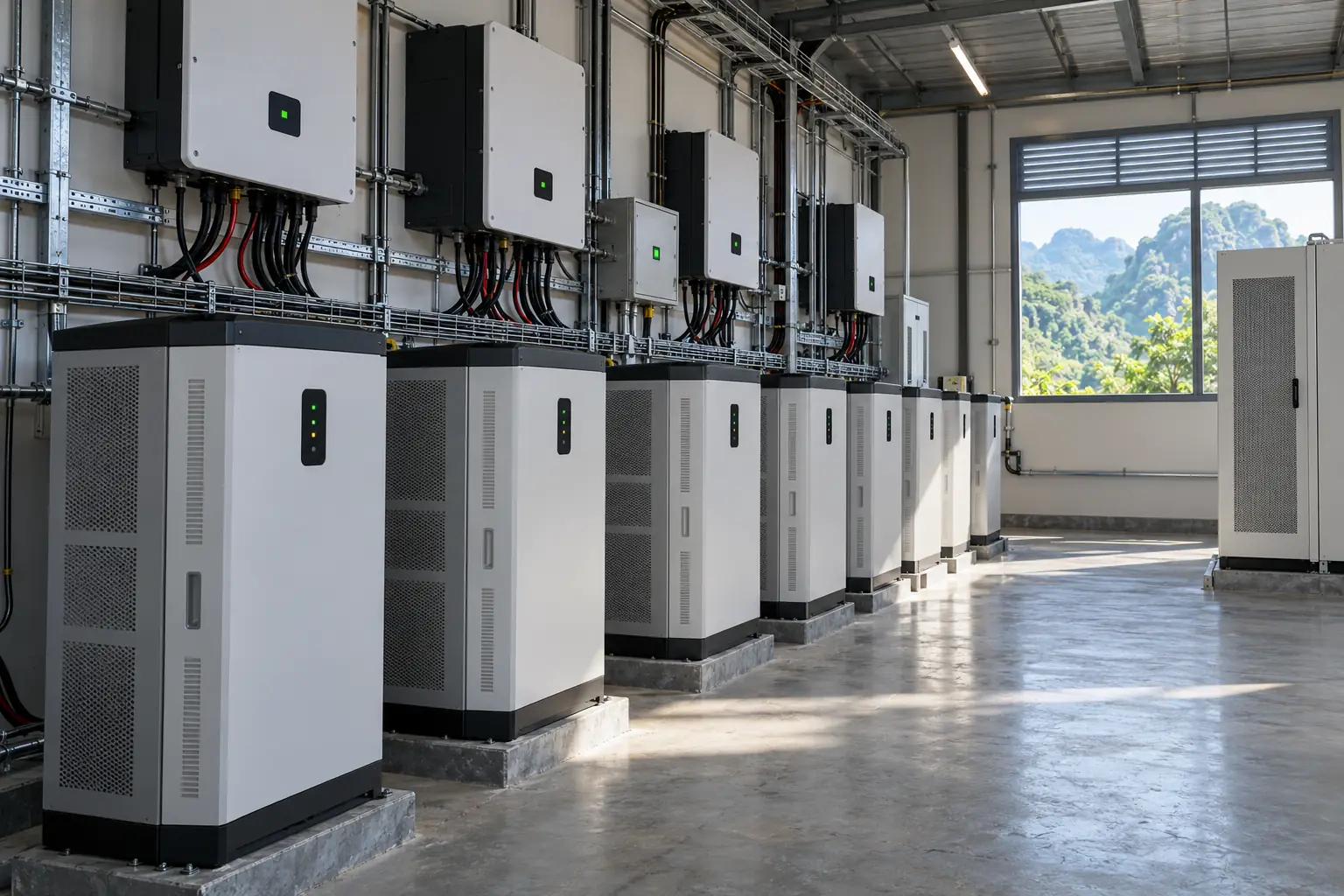
In daytime the panels power your machines. Surplus charges the battery for the evening. The EMS meters every flow and decides when to charge and discharge.
- Panels Turn sunlight into DC power on the roof.
- Hybrid inverter Converts to AC and splits power between load, battery and grid.
- Battery Stores daytime surplus for when you need it.
- EMS Meters, controls and reports energy by hour and by month.
Three packages to start from
Each package is a starting configuration. Exact capacity and storage are fixed only after load metering.
A
Package A: Grid-tied + EMS
For factories that run mostly in daytime
- Rooftop panels
- Grid-tied inverter
- EMS metering per feeder
B
Package B: Hybrid + small battery
For workshops with short load peaks
- Rooftop panels
- Hybrid inverter
- Small peak-shaving battery
- EMS control
C
Package C: Hybrid + large battery
For hotels and sites with heavy evening use
- Rooftop panels
- Hybrid inverter
- Large storage battery
- EMS control and reporting
No fixed list prices: Cost depends on roof, load and equipment, and is quoted in writing after a survey.
Panels we install
TTK uses LONGi panels, chosen by roof type. Specifications come from the manufacturer datasheets.

From survey to operation in 5 steps

- 1
Survey
Check the roof, structure, switchboards and 3–12 months of bills.
- 2
Load metering
Install EMS meters for a few weeks to get a real hourly load profile.
- 3
Design and quote
Size the PV and battery, draw the connection; written quotation.
- 4
Install and accept
Install, test, accept with you and complete utility procedures.
- 5
Operate
Monitor through EMS, monthly reports, scheduled maintenance.
Transparent payment
Contract milestones
Pay by the milestones in the contract: Signing, equipment delivery, acceptance.
Bank financing
If you borrow, TTK prepares the technical data for your application. Loan terms are set by the bank.
Written quotations
Every quotation lists equipment, model numbers, warranties and installation time.
Company profile
Founded in 2011, TTK has its head office in Hanoi and a representative office in Ninh Binh, and has worked with many FDI factories in Ninh Binh.
View detailsFrequently asked questions
How much can solar save?
It depends on your daytime load, roof area and tariff. The calculator gives an estimated range; firm numbers come after EMS load metering.
What is the difference between hybrid and grid-tied?
A grid-tied system only supplies power while the sun shines. A hybrid adds a battery to store surplus for the evening or outages.
Can panels go on a metal roof?
Yes, if the structure can carry the load. The Hi-MO X10 weighs 28.5 kg per panel, lighter than the Hi-MO 7 (33.5 kg), and suits metal factory roofs. TTK checks the structure during the survey.
Is battery storage safe?
Batteries need a proper location, protection devices and fire safety. TTK shows the location and protection in the design file for your approval.
What warranties apply?
Panels are warranted by the manufacturer: Hi-MO X10 15 years product, Hi-MO 7 12 years, both 30 years power output. Installation is warranted by TTK under the contract.
Can surplus power be sold to the grid?
Rules on selling rooftop solar surplus change over time. TTK checks the current regulations and works with the utility for each project; the web calculator does not count export revenue.
How long does installation take?
It depends on capacity and procedures. The schedule is stated in the quotation after the survey.
What is the EMS for?
The EMS meters each feeder, shows how much grid power solar has replaced, and produces monthly reports for your customers or parent company.